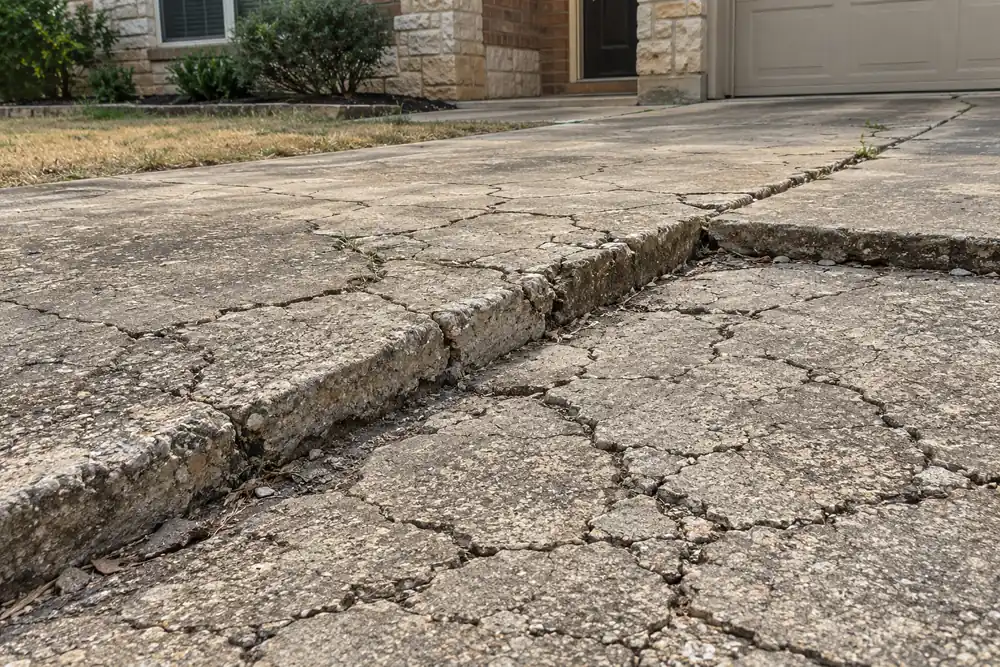
Concrete Driveway Repair in Austin, TX
Heritage Concrete Austin carries out concrete driveway repair in Austin, Texas, from sealing cracks and patching potholes to lifting a sunken panel or sawing out a broken one and pouring it back. The City looks after select sidewalks, but it says keeping up and repairing the driveway is the property owner's job.
Estimates are free by phone or through the form. We'll check what caused the damage first, since a patch laid over a washed-out base or a growing root won't last, then price the fix that fits: filling, lifting, resurfacing or new sections.
Call or request a free estimate any time, 24/7
No charge · answered 24/7
Get free estimates
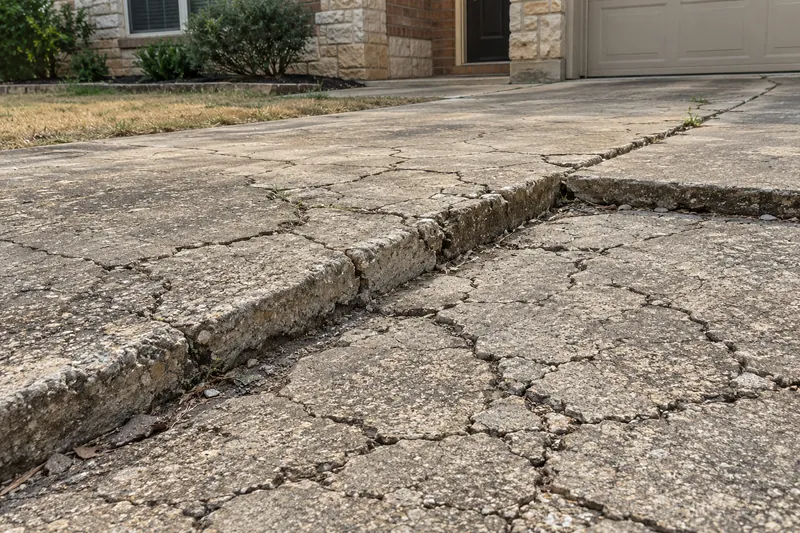
Driveway damage and the repair that fits it
Narrow cracks
A crack about ⅛ inch wide is usually a candidate for a simple repair. The usual method chisels the crack into a cut that angles back under the surface, clears out the loose material, brushes on a bonding adhesive, fills the gap and feathers it level; a crack ½ inch or wider gets a foam backer rod or sand pushed in first. Below ¼ inch, a fill keeps debris out, but it isn't watertight and counts as a temporary fix. Sealing methods for every kind of slab are on our page about concrete repair.
Wide cracks, flaking and stains
Once cracks pass ¼ inch, or the top is peeling, chipping or discolored, a resurfacing layer or overlay can cover the damage, provided the slab underneath is sound. A drive that is badly cracked or broken up shouldn't be resurfaced at all. Overlays and sealers are covered under concrete resurfacing.
Sunken panels
A panel that has dropped below its neighbors usually sits on fill that was never compacted well, or on soil that has washed away. Pumping a grout of sand, cement and fly ash beneath it can raise it back into line, but a slab that has settled badly may have to come out so the ground can be corrected first; see concrete leveling.
Lifted and buckled panels
Lifting only helps a panel that has gone down. A home-inspector association names a slab that expansive soil has pushed upward as one case where mudjacking is the wrong tool, and a 2026 Austin cost guide notes that tree roots hunting for moisture in dry spells often buckle drives. Check the tree before any root is cut: in Austin, damaging the root system of a protected tree, one 19 inches or more in diameter, counts as removing it, and removal needs a permit.
Call or request a free estimate any time, 24/7.
(512) 588-2862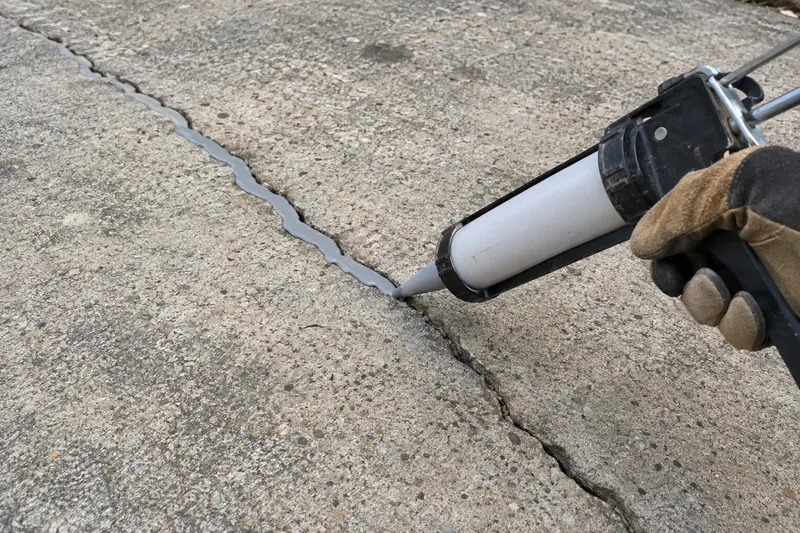
When driveway repair stops making sense
An industry checklist gives seven signs that a drive is due for replacement: deep or widespread cracking, a heavily spalled top, water that won't drain, sinking, neglect, old age and poor curb appeal.
Replacing single sections
When the damage stays in one or two panels, those panels can be sawn out and poured again without touching the rest. Expect them to stand out at first: NRMCA says a repair won't match the original concrete in color or character.
Water that stands on the drive
Standing water, or a drive pitched the wrong way, can sometimes be cured with a drain; in other cases only a new slab will do it. The Portland Cement Association's minimum fall for a drive is ⅛ inch per foot, away from the house and garage and toward the street.
For a full tear-out and new pour, see concrete driveway replacement. Heritage Concrete Austin can price the repair and the replacement side by side at the estimate.
Call or request a free estimate any time, 24/7.
(512) 588-2862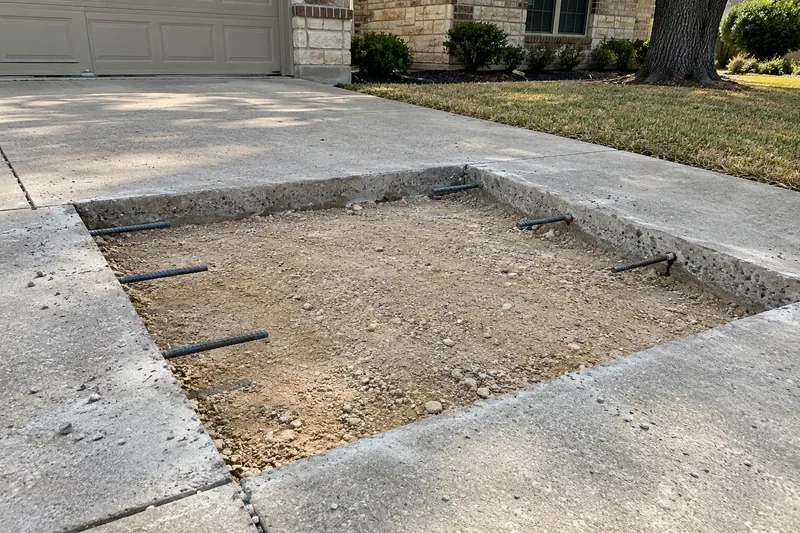
Repairing the approach where the drive meets the street
The strip nearest the curb is usually public right-of-way; the City puts its typical depth at ten feet in from the street, with wide variation across town.
City permits for approach repairs
Repairing a driveway approach in the right-of-way takes a Driveway/Sidewalk permit plus a transportation review. For a repair or a replacement, nothing beyond the application is required, while new approaches need approved plans, and the code lets a minor repair go without a permit where the City decides it qualifies. The application has to come from a contractor the City has licensed for right-of-way work. Shutting a sidewalk or driveway so work can go on inside the property line calls for its own Temporary Use of Right of Way permit, and a driveway re-inspection costs $188.80 (fees effective October 1, 2026).
County roads outside the city
In the unincorporated places around Austin, county rules apply instead. Heritage Concrete Austin also handles concrete driveway repair in Shady Hollow, where the median home was built in 1987 (survey estimate) and Travis County, which oversees the unincorporated part, allows only concrete or asphalt for an approach onto a county road, and driveway repair in Brushy Creek, where Williamson County maintains the streets and asks for a Driveway/Access Application before an existing driveway onto a county road is modified.
Call or request a free estimate any time, 24/7.
(512) 588-2862Why Austin driveways crack, sink and heave
Clay that swells and shrinks
East of the Balcones Escarpment, the deep Houston Black clay splits open in dry seasons: USDA describes cracks ½ to 4 inches across running 12 inches deep or more, and in a typical year the gaps last 90 to 150 days before closing. Travis County's hazard plan says the worst damage comes when a dry stretch follows a wet one and rain then returns. The City's Transportation Criteria Manual says soil moisture in central Texas swings through a zone 10 to 15 feet deep.
Heat, storms and leaks
Camp Mabry logs an average of 122.8 days a year that reach 90°F (normals for 1991–2020), and an Austin thunderstorm can unload over 5 inches of rain within a few hours, the National Weather Service says. Water finds the weak spots. Roots growing beneath the concrete, or a pipe that leaks and scours the base away, can crack, sink or discolor a drive, and when either one is behind the damage, a new slab may be the only fix that lasts. Heritage Concrete Austin looks under a failed panel for the cause during the estimate.
Call or request a free estimate any time, 24/7.
(512) 588-2862Concrete driveway repair cost in Austin
Around Austin, a concrete driveway repair averaged $1,436 in 2026 figures, and most bills landed between $584 and $2,289. Where the surface needs heavy preparation, cleaning it and hauling off debris adds $50 to $100 an hour. Nationally, many contractors charge a minimum of $100 to $250 just to bring a crew and equipment to the site.
These are published averages, not prices from Heritage Concrete Austin; your own figure turns on the damage and its cause, and estimates cost nothing.
- Crack filling
- $0.50–$5 / lin. ft
- Pothole patch
- $100–$395 each
- Resurfacing
- $5 / sq ft
- Raising or leveling
- $5–$25 / sq ft
- Slab replacement
- $10–$15 / sq ft
Typical Austin-area driveway repair prices, 2026. Averages, not a quote.
Call or request a free estimate any time, 24/7.
(512) 588-2862Driveway repair questions
Can a damaged concrete driveway be repaired?
Usually, when the damage is limited and the ground beneath has stopped moving. Narrow cracks can be filled, dropped panels raised, worn tops resurfaced and single broken panels replaced. Every repair is temporary to a degree, though some hold for many years, and a cause hidden below, like roots or a leak eating away the base, can leave replacement as the real answer.
How much does it cost to fix cracks in a concrete driveway?
Austin-area crack filling costs between $0.50 and $5 a linear foot (2026), slightly above the national $0.50 to $3. Measured by the job, national figures put crack fixes and pothole patches on a drive at $100 to $400, and major repairs or resurfacing at $600 to $3,000.
Should I fill cracks in my concrete driveway?
Yes for narrow ones, as routine upkeep. Cleaning a crack out and filling it keeps water and grit from working in, and resealing the whole surface roughly every two years, sooner if the finish wears, helps block moisture. Filling won't help a crack caused by a sinking panel or a root, though; deal with the cause first.
How much does it cost to level a sunken driveway?
National figures for 2026 put lifting a small sinking section at $600 to $1,200 and leveling a whole driveway at $1,400 to $2,700. Around Austin, raising or leveling concrete runs $5 to $25 per square foot. A panel pushed up by swelling clay is a different problem, since lifting can't bring it down.
How soon can I drive on a repaired driveway?
That depends on the repair. One widely sold polymer resurfacer allows walking at 8 hours and driving at 24; lifting foam is at 90% strength within roughly 15 minutes; and a replaced section is new concrete, so allow 7 to 10 days before parking on it, and stay off its edges at first.
Get a free driveway repair estimate
Tell us by phone or through the form what you are seeing: cracks, a sunken or lifted panel, a broken corner or a worn surface. Heritage Concrete Austin prices driveway repairs at no charge and answers 24/7.