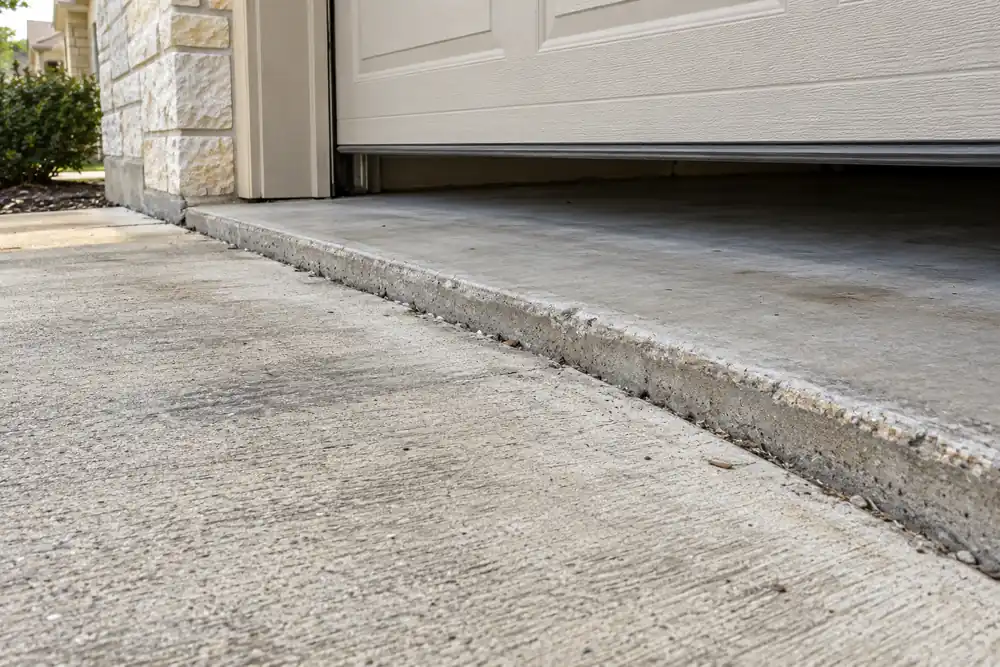
Concrete Driveway Repair in Brushy Creek, Texas
Heritage Concrete Austin provides driveway repair in Brushy Creek, Texas, mending cracked, spalled and worn concrete drives and the stretch where each one meets the street. In the Census Bureau's 2020–2024 estimates, 2,831 of the community's 7,147 housing units were built in the 1990s and 1,573 in the 1980s, with 1995 as the median year built.
Brushy Creek is an unincorporated community in Williamson County, just west of Round Rock. It reaches from Whitestone Boulevard (RM 1431) on the north to RM 620 on the south, with the creek itself flowing west to east through the middle, the Community Center on Great Oaks Drive, and the mostly concrete regional trail heading west along the water to Twin Lakes Park in Cedar Park. Tell us what your drive is doing, on the phone or through the form; the estimate costs nothing.
Call or request a free estimate any time, 24/7
No charge · answered 24/7
Get free estimates
Subdivisions north and south of the creek
Building began by the mid-1970s on land that had served ranches and lime quarries. North of the creek, Spanish Oak Terrace was first developed in 1973–74, Great Oaks in 1973–75 and Tonkawa Springs in 1977. South of it came Woods of Brushy Creek (1985), Fern Bluff (1986–87), Cat Hollow at Brushy Creek (1987) and Stone Canyon (1995–96). The utility district was created on October 27, 1977, and the building boom of the early 1980s carried growth from there: 5,833 people in 1990, 15,371 by 2000 and 22,519 in the 2020 Census, living in 8,088 housing units.
Single-family detached houses make up about 82% of the homes, and owners live in about 73% (2020–2024 estimates). Most subdivisions have a homeowners association formed under their deed restrictions, from Brushy Creek North and Sendero Springs to Highland Horizon, so most drives here sit under an HOA's rules as well as the County's.
Call or request a free estimate any time, 24/7.
(512) 588-2862Limestone ground along the Balcones Escarpment
Williamson County's history of the community notes that the Balcones Escarpment runs north–south along its eastern edge. Read at one spot, the Census Bureau's internal point for the community, the USDA soil survey shows Eckrant stony clay on 0 to 3 percent slopes. Eckrant is a very shallow to shallow soil over hard limestone: USDA gives a depth to hard bedrock of 4 to 20 inches and 35 to 60 percent clay. At that mapped point the top layer holds 42% clay and has a linear extensibility, the measure of shrink and swell, of 6%; for comparison, the deep Houston Black clay rates 12 percent in the Travis County survey data.
One mapped point doesn't describe every lot. When the Natural Resources Conservation Service rates a soil for concrete driveways, it looks at bedrock depth and hardness and at large stones, which affect excavation and grading, and at shrink-swell, which affects how the slab performs over time. So the ground under your drive is worth a look before a broken section is cut out.
Call or request a free estimate any time, 24/7.
(512) 588-2862Williamson County's driveway policy
Because Brushy Creek is unincorporated, there is no city permit office, and county rules apply. Williamson County adopted its Driveway Policy on December 7, 2021, and it calls for a Driveway/Access Application both to build a driveway onto a county road and to modify an existing one. For a resident's drive, County staff come out to the lot and size any culvert; buying and installing it falls to the applicant. The policy doesn't say whether a repair poured back in the same footprint counts as a modification, so ask the County before the old concrete comes out.
Width, grade and surface
For a home in a subdivision on a curb-and-gutter street, the policy's criteria are a radius of at least 5 feet, a width of no more than 24 feet and a suggested maximum change in grade of 15%, and access must also comply with plat notes and deed restrictions. Together, a lot's driveways can't exceed 70% of its roadway frontage. On a residential drive the owner picks the surface, with an all-weather material recommended; commercial, industrial and multifamily drives must be concrete or asphalt.
Inspections, culverts and the one-year window
The County inspects a resident's driveway at set stages: with a culvert, when the forms are set and before concrete is placed; without one, after grading and before the pour; and once more at completion. Skipping a required inspection, or building off standard, may lead the County to order the driveway removed and replaced. Culverts need an inside diameter of at least 18 inches and a length of at least 24 feet, finished with a concrete safety end treatment built to current TxDOT standards, and once an application is approved, the work has one year to be finished before a new application or another inspection is needed.
Call or request a free estimate any time, 24/7.
(512) 588-2862The MUD, your HOA and the County certificate
Williamson County has no zoning, can't issue certificates of occupancy and has not adopted a residential building code for its unincorporated areas. For the County, a "building permit" means a Certificate of Compliance, a floodplain check required for all structures and other development outside a floodplain in unincorporated areas. Property within or next to a 100-year floodplain needs a County Floodplain Development Permit before construction starts.
The Brushy Creek Municipal Utility District works somewhat like a city but has no power to zone land or issue building permits; its own list sends outside remodeling and add-ons to the district and the neighbourhood HOA. Since 1997 all district land has sat in Round Rock's ETJ (extraterritorial jurisdiction: land just beyond a city's limits where that city has some control over development), and the County tells owners in a city's ETJ to check with that city as well.
Call or request a free estimate any time, 24/7.
(512) 588-2862Resurfacing a worn driveway or patching spalls
Surface damage is the other common job. Spalling, the crumbling or pitting of the top layer, can start with poor finishing, improper curing or a bad mix, or with freeze-thaw cycles and de-icing salts. Depending on how far it has gone, the repair can be a patch matched to the old color, an overlay, or a new slab after tear-out.
An overlay from a high-quality product, installed by a professional, averages 8 to 15 years of service and can reach 25 with consistent maintenance and a favorable climate. Early failures trace mostly to cheap materials, inadequate prep of the old surface, and errors when the product is mixed or applied, and no overlay holds up for long on a slab that is already cracked, damaged or moving. The data sheet for one widely sold resurfacer says the old control joints have to be carried through the new layer, and that cracks reflecting up through it can't be completely prevented, especially where the slab settles.
National 2026 figures for repairing spalled concrete run $3 to $5 a square foot, which comes to $1,800 to $4,200 across a two-car, 600-square-foot driveway; the national average for repairing a driveway is $1,200, in a typical range of $300 to $2,500. Treat these as published averages rather than our prices; a firm figure comes from seeing the drive, and that estimate is free.
Call or request a free estimate any time, 24/7.
(512) 588-2862Other concrete jobs in Brushy Creek
Along with repairs, the jobs we take on here include full driveway replacement, leveling for sunken walks and patios, new sidewalks and walkways, patios and landscape curbing. West along the trail, Heritage Concrete Austin pours multifamily concrete in Cedar Park, and for shops and offices to the east it acts as a commercial concrete contractor in Round Rock.
Call or request a free estimate any time, 24/7.
(512) 588-2862Steps in a driveway repair job
General practice; which approvals apply depends on the lot and the work.
Free estimate
We measure the damage, check how water drains off the drive and note whether the work reaches the street.
HOA, MUD and County
Outside work goes to your HOA and the MUD; a change to a driveway that meets a county road needs a Williamson County Driveway/Access Application.
Utility locates
The MUD tells residents to contact Dig-Tess before digging, and Texas law wants the one-call notice in between 14 days and 48 hours ahead of excavation, weekends and legal holidays excluded.
Forms and inspection
Where the County is involved, its inspector checks the forms before any concrete is placed.
Pour, cure and final check
The new concrete is placed, finished and cured, and the County inspects the driveway again at completion.
Call or request a free estimate any time, 24/7.
(512) 588-2862Questions about permits and upkeep
Who maintains the street and sidewalk in front of my house?
Inside the utility district, Williamson County's Road and Bridge department maintains the streets and handles road repairs. Sidewalk upkeep falls to the County and the neighbourhood HOA, so a repair where the drive crosses a sidewalk may involve both.
Does Williamson County require a building permit for driveway work?
Not a building permit in the city sense. The County has no residential building code for unincorporated areas; what it requires is a Certificate of Compliance, which checks for floodplain, and nothing from its Road and Bridge division unless a driveway is being put in. Building or modifying a driveway onto a county road takes a Driveway/Access Application under the 2021 policy.
Schedule a free driveway repair estimate
Call Heritage Concrete Austin day or night, 24/7, or send the form about a cracked, spalled or worn drive in Brushy Creek, Round Rock or Cedar Park; the estimate is free.