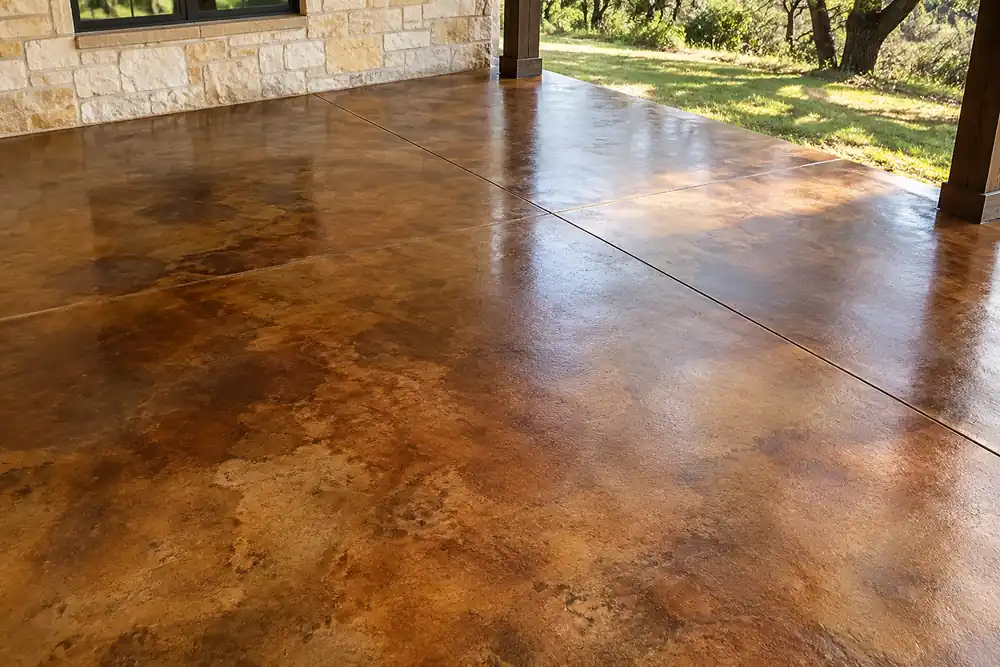
Stained and Decorative Concrete in Austin, TX
Heritage Concrete Austin offers stained concrete in Austin, Texas, along with other decorative concrete finishes such as acid and water-based stains and integral color, on patios, walks, drives and indoor floors. A stained walkway costs $8 to $25 a square foot in typical Austin-area prices for 2026, compared with $2 to $6 for colored concrete.
Estimates are free. On a call or through the form, we'll cover stain type and color, the age and finish of your slab, and the sealer that suits a sunny patio or an indoor floor.
Call or request a free estimate any time, 24/7
No charge · answered 24/7
Get free estimates
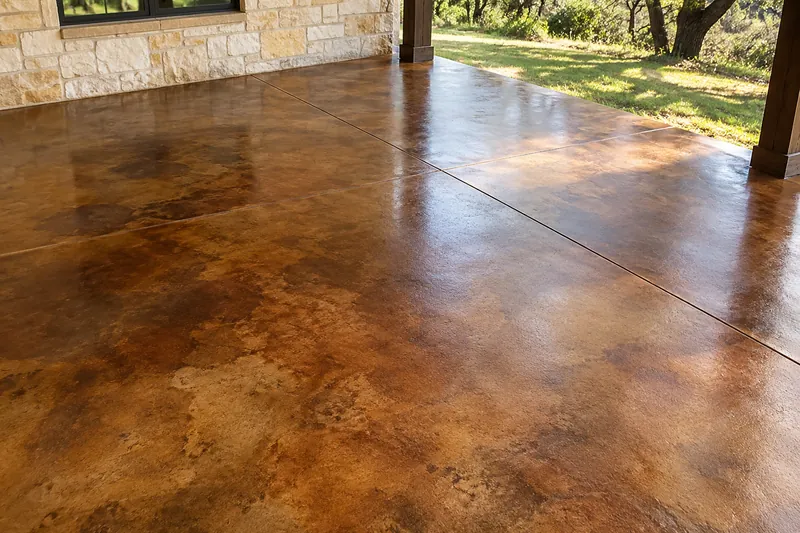
Stain types: acid, water-based and integral color
Acid stain
Acid stains are mostly water and hydrochloric acid carrying metallic salts that dissolve in acid. They soak into the surface and reacts with the hydrated lime (calcium hydroxide) in the concrete, so the color forms in the slab rather than sitting on it: a true acid stain is translucent and leaves no film or coating. The palette is narrow, mostly earthy browns and tans, terra cottas and soft blue-greens, and the reaction has to be stopped afterward with water mixed with baking soda, TSP or ammonia, then rinsed off thoroughly. One acid-stain maker rates a gallon at roughly 200 to 300 square feet.
Water-based stain
Water-based stains, usually acrylic polymers carrying pigment, also penetrate and give permanent color. With no chemical reaction involved, the tone comes out more consistent. Makers sell dozens of stock colors, black, white and metallic tints among them; nothing needs neutralizing, and most of these stains are low in solvent fumes.
Integral color
Pigment can also go into the mix itself. Under the ASTM standard for concrete pigments, the dose tops out at 10 percent of the cement's weight, and most quality pigments are fully saturated at roughly 5 to 6 pounds for each sack of cement. Pigmented or plain, concrete is a natural material and shows some mottling and color variation. Integral color is also one of the two ways to color stamped concrete.
Heritage Concrete Austin also lays stained and decorative concrete in Bee Cave, where the City's design menu for new single-family homes counts a driveway of concrete with the stain mixed in, rather than applied, as an upgraded surface.
Call or request a free estimate any time, 24/7.
(512) 588-2862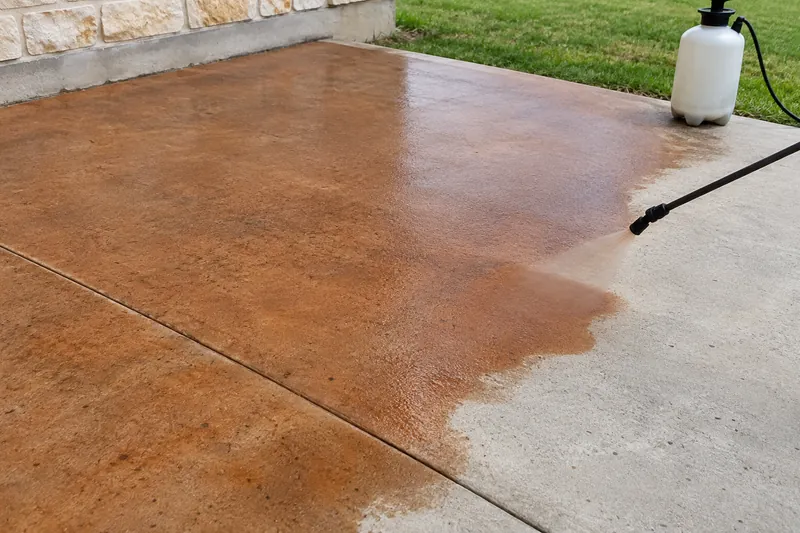
How a concrete stain job is done
Let the slab cure
Industry guidance treats a cure of 10 days to 2 weeks as usually long enough before stain goes on, particularly when the weather is warm and dry.
Prepare the surface
Unless the surface pores are opened first, the stain just rinses off. A slab that was power-troweled, or is very dense and smooth, may need mechanical or chemical profiling before acid stain will react, and patches or past repairs take the color differently.
Apply the stain
One maker sets the window at air temperatures between 50°F and 90°F, and says its stain can't cover up blemishes, cracks or discoloration already in the slab.
Stop the reaction
The acid reaction is halted with a neutralizing wash and a thorough rinse; the same maker says leftover residue causes sealer adhesion and durability trouble.
Seal or wax
Outside, on a warm and sunny day, the slab can dry enough for sealer within about two hours; a clear sealer then protects the color. After sealing, the maker asks for a day without foot traffic and five days without cars. Indoor floors take a good floor wax instead.
Staining in Austin heat. Camp Mabry's normal daily high passes 90°F by May 26 and doesn't fall back below it until September 23 (1991–2020 normals). That is the top of the stain maker's range, while the American Society of Concrete Contractors holds water-based sealers to air and slab temperatures of 45°F and rising, and no more than 90°F.
Call or request a free estimate any time, 24/7.
(512) 588-2862Other decorative concrete finishes
Exposed aggregate
Where stone matters more than color, a surface retarder slows the set of the top mortar so it can be washed off to bare the aggregate. More on exposed aggregate concrete.
Polished floors
Indoors, color can be paired with grinding and polishing. The Concrete Polishing Council says a polishing mock-up should always be done on the actual slab, because the aggregate's type and size change the final color. See polished concrete floors.
Salt and broom textures
Salt finishing adds a subtle texture and some slip resistance to plain or colored concrete at low cost, and a broom finish adds grip too. Austin price tables list a salt-finished walkway at $8 to $12 per square foot (2026).
New color on an old slab
A worn slab that is still sound can take a thin decorative overlay instead of a new pour; those overlays are covered under concrete resurfacing. Heritage Concrete Austin walks through the finish options with you at the estimate.
Call or request a free estimate any time, 24/7.
(512) 588-2862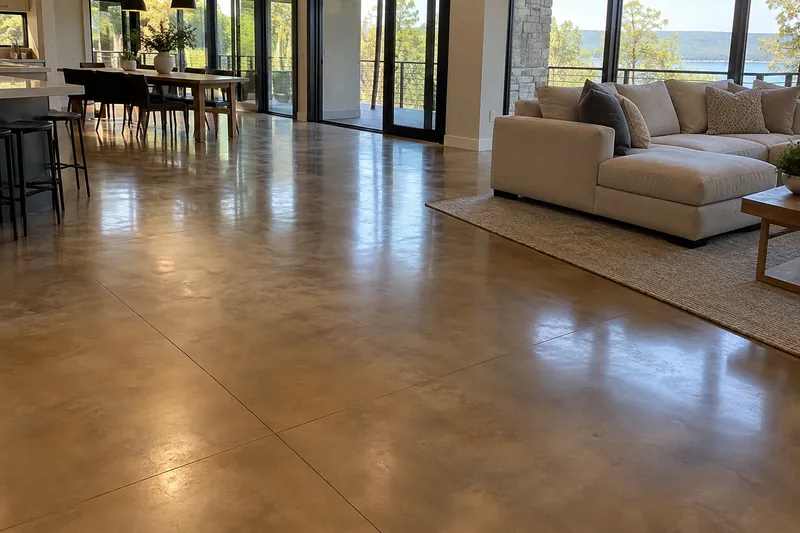
Stained concrete cost in Austin
Staining an existing slab is priced by how many colors and how much design it carries. National 2026 figures run $3 to $5 per square foot for a basic single color with sealant, $5 to $10 for two colors, $10 to $15 for multiple colors and patterns, and $15 to $25 for complex stencil or scoring work. A calculator set to Austin prices puts decorative stain on a small 125-square-foot job at $626 to $738 in total (September 2026).
Budget for upkeep as well: national guidance says to reseal stained concrete every 1 to 3 years, and sealing, usually part of a staining price, runs $1 to $3 a square foot. Treat all of these as published averages rather than quotes from Heritage Concrete Austin; the estimate for your slab is free.
- Broom finish
- $1–$3 (or included)
- Polished
- $3–$12
- Exposed aggregate
- $7–$15
- Stained
- $8–$15
- Stamped
- $10–$18
Typical Austin-area slab finish prices, 2026. Averages, not a quote.
Call or request a free estimate any time, 24/7.
(512) 588-2862Stained and decorative concrete questions
What are the common problems with decorative concrete?
Most trace back to the slab or the preparation. Concrete varies in color from slab to slab whether it is pigmented or not; repaired spots take stain differently; very dense, power-troweled surfaces can resist acid stain; and acid residue left behind weakens the sealer's grip. The sealer can also turn cloudy white when moisture, water vapor or solvent, gets trapped between its layers.
Can you put decorative concrete over existing concrete?
Yes, if the old slab is sound. One professional fine overlay is only 1/16 to 3/16 inch thick; stamped overlays typically run ¼ to ¾ inch; the old surface is roughened to a set profile first, and its control joints are carried up through the new layer. Large cracks, heavy spalling or severe settling can rule an overlay out. A sound existing slab can also be stained directly, once its pores are opened so the stain can soak in.
Is staining concrete a good idea?
On a sound slab, often yes. A true acid stain leaves no film to peel or wear away, and water-based stains add a wider palette with low solvent fumes. In Austin finish tables, staining costs less per square foot than stamping ($8 to $15 against $10 to $18, 2026). Stain is the wrong tool for hiding a slab's flaws, though: it shows the concrete's own marks, cracks and patches instead of covering them.
How long will stained concrete last?
The color itself holds: on properly prepared concrete, it won't fade, chip or peel. The sealer over it is what wears. As a rule of thumb, the American Society of Concrete Contractors calls for fresh sealer every 2 to 3 years on busy, sun-exposed surfaces and every 4 to 5 years on interior and lighter-traffic ones.
Can stained concrete be used indoors?
Yes, and floors are a common use. Indoors, stained floors are finished with a quality floor wax, while outdoor slabs get a clear sealer, and most water-based stains are low in solvent fumes. National figures put stained concrete floors at $2 to $6 per square foot (2026).
Get a free stained concrete estimate
Share the slab's rough size, where it is and the colors you like, by phone or with the form. Heritage Concrete Austin prices stain, color and decorative finishes for free, at any hour.